

The stock records of warehouse operations are usually maintained using bar code scanning, cycle counting, and WMS. There will be instances where mistakes may arise because some movements were not recorded and manual entry of data can result in mistakes. This article will help you find mistakes using RFID in the process, including the use of RFID labels for inventory identification and tracking. Try it out with a pilot test and see how well RFID works. You will learn how to use RFID to make things better.
Key Takeaways
-
RFID tracking is accomplished using tags, RFID labels, readers, and software.
-
Problems occur in the stages of receiving, putaway, picking, shipment and returns.
-
UHF RFID is able to scan items in bulk without line of sight.
-
Tagging must take into account material, location, and environment.
-
The read point should be correlated to pre-specified warehouse activities.
-
The integration of RFID data into WMS is a conversion to transactional data.
-
Pilot testing proves the efficacy of RFID.
What Is RFID-Based Inventory Management?
The use of RFID technology in managing inventories involves the use of tags, readers, and integrated systems. In using the RFID technology, a tag or RFID label is scanned, and the ID of the product is captured, filtered by the middleware and entered into the WMS.
Passive UHF RFID technology, including UHF RFID labels, unlike barcodes, enables scanning of several items without being directly aligned. For example, a whole load of cartons can be read within seconds.
Nevertheless, RFID cannot alone solve the problem of inaccurate information. This technology should be used together with structured processes and business rules.
Why Does Reducing Inventory Errors Matter?
The precision of stock is very important for the process of order fulfilment, purchase, and customer satisfaction. The system will assume the availability of products even if these are not present due to the difference between the system record and the actual physical stock.
This happens when there is an error during the process of receiving, which makes the stock available physically without being recorded on the computer.
Errors will affect productivity, warehousing, replenishment, and auditing. Sometimes, a minor error can cause frequent investigation of the problem.
According to the RAIN Alliance, 52.8 billion RFID tag chips were shipped around the world in 2024. Still, the technology itself cannot ensure the accuracy of stock.
Which Inventory Errors Can RFID Prevent?
RFID technology is useful in error prevention by detecting tagged items at designated checkpoints and ensuring that movement transactions are appropriate.
Missing Receiving Transactions
RFID portals installed on receiving doors would be able to detect the incoming pallets and cross-reference these with the purchase orders.
Wrong Item Quantity
RFID automatically tallies up items carrying RFID labels or RFID tags, eliminating manual data entry errors. The difference will be flagged instantly.
Wrong Storage Location
Through item and location tagging, RFID will be able to ensure that proper storage is done.
Duplicate Movement Transactions
Movement transactions are captured between areas such as storage, manufacturing and staging areas, therefore updating the system whenever there is movement.
Duplicate Entries
The middleware software filters duplicate read transactions.
Cycle Count Miscounts
With handheld scanners, cycle counts can be done rapidly in full zones where the items are not found.
Pick Errors
Using RFID, the pick is verified to be done for the right item; thus, errors involving similar items are avoided.
Incomplete Order Errors
The packing stations may check whether the order includes all items needed before shipment.
Wrong Shipments
Dock-door scanners ensure the right goods are put in the right delivery vehicles.
How Do You Reduce Inventory Errors with RFID?
To eliminate errors with RFID, pinpoint areas for improvement, select suitable RFID solutions, and pilot the results.

Step 1: Baseline Data Collection
Track real-time inventory accuracy, cycle count time, picking errors and adjustments.
Step 2: Identify Error Points
Develop process maps to identify differences between physical system inventories and information system inventories.
Step 3: Selecting the Tagging Level
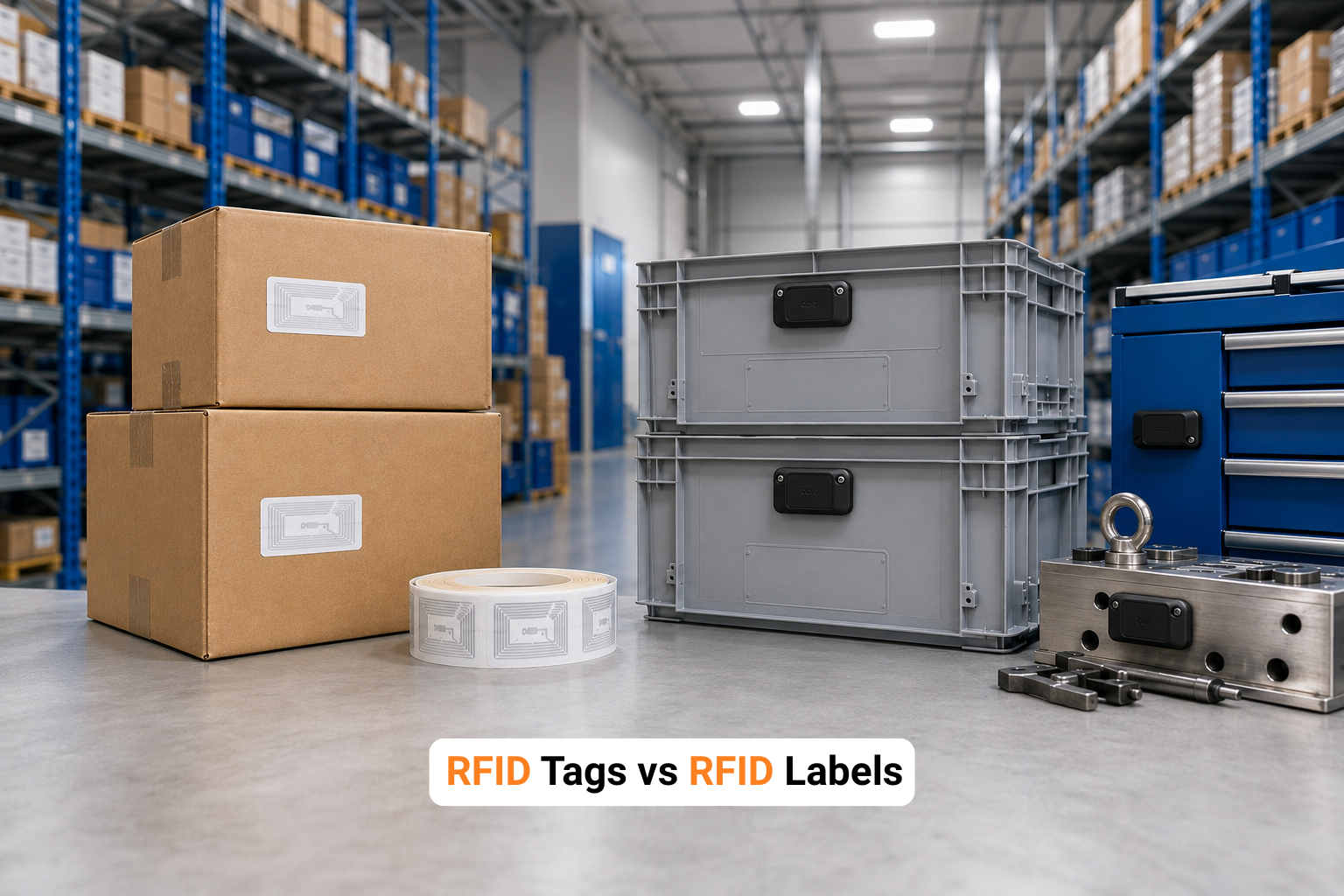
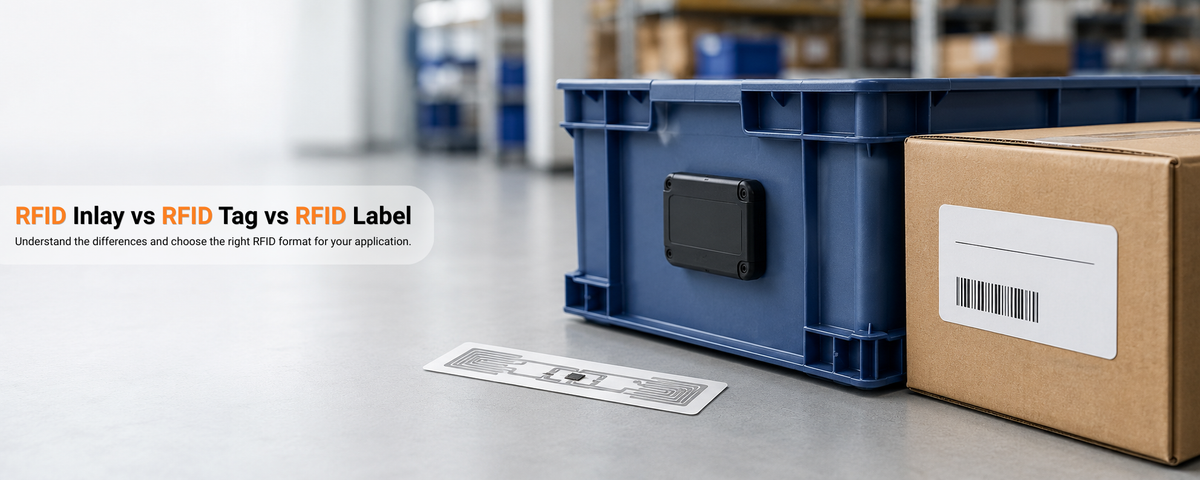
Evaluate the needs of the business and decide whether to use RFID labels or tags on items, cartons, pallets or locations.
Step 4: Choose Tags
Test UHF RFID labels and tags on actual products and materials. Metal or liquid-based objects may require specialised tags.
Step 5: Read Points Creation
Install RFID readers at critical events, such as receipt, packing, and shipping of goods.
Step 6: Integration to WMS
Capture and process RFID device data into transactions.
Step 7: Testing and Scaling Up
Test the system in a controlled environment, compare the results to the baseline data, and make any necessary adjustments before scaling up.
Where Should RFID Be Applied?
RFID labels can be particularly useful for cartons, packages, products and other assets that require individual identification.
RFID works best in operations that are prone to a lot of mistakes, such as receiving, putaway, picking, packing and shipping.
Fixed RFID readers can automatically check repeat checkpoints. Mobile RFID readers can be used to perform cycle counts and item searches. RFID can help, but not replace, barcodes.
How Do You Select RFID Equipment?
RFID performance depends on product material, RFID label or tag placement, and environment. Testing is essential to ensure reliable reads.
European deployments must comply with ETSI EN 302 208 standards for UHF RFID systems.
How Do You Integrate RFID with WMS or ERP?
The RFID process transforms the raw data into confirmed transactions. The flow of data starts with the tag and passes through the reader and middleware into the WMS.
Workflows are required for duplicate elimination, location determination, and validation. Otherwise, the data collected using RFID technology is meaningless.
Which Tools and KPIs Should You Use?
An RFID inventory system will comprise tags or RFID labels, scanners, middleware, and a dashboard which is linked to your WMS or ERP. All components must be able to support clear warehouse process operations.
Keep an eye on these KPIs for your pilot run:
-
Inventory and location accuracy
-
Time taken to do cycle counting and number of units counted per hour
-
Error rates in picking and shipping
-
Rate of successful RFID reads
-
Time to make stock adjustments and discrepancies
Measure your performance improvement by comparing manual counting with RFID results.
What Should You Do Next?
Begin with one significant process with quantifiable errors. Define workflows, perform tests using tags and UHF RFID labels and conduct a pilot project.
Analyse outcomes, solve problems like reading failures or incorrect tag placement, and grow slowly.
Conclusion
RFID increases the accuracy of inventory data, as it tracks transactions instantly and not through manual adjustments. The success of RFID projects depends on proper selection of RFID tags and RFID labels, designing optimal reading points, proper system integration, and setting realistic goals.
Start small, validate results, and expand based on proven improvements.
Ready to Improve Your Inventory Accuracy?
Explore The RFID Company BV RFID Solutions.
Contact Us for Expert Guidance
FAQs
1. Is RFID more accurate than barcodes?
Radio Frequency Identification technology can be more accurate than barcodes because Radio Frequency Identification does not need to see the tags to scan them, and it can scan a lot of items at the same time.
The accuracy of RFID will depend on picking the RFID tags and putting them in the right place on the items.
2. Does RFID guarantee complete elimination of inventory errors?
No, RFID cannot guarantee complete elimination of errors. This will be possible when the technology is used together with appropriate processes and integration.
3. What kinds of products are hard to tag with RFID technology?
Products that contain metals or liquids will interfere with the radio waves, and special RFID tags are necessary to use.
4. What is the time required to install RFID technology in a warehouse?
The time required depends upon the size and complexities of the warehouse. It will take a few weeks to perform a pilot study, whereas implementation takes a few months.
5. Is RFID technology costly to implement?
RFID technology costs money to set up. You have to pay for RFID tags and RFID readers and software and getting everything to work together. A lot of companies make that money back by doing things more efficiently and making fewer mistakes with their operations.
6. Can we use RFID with bar codes?
Yes, we can use RFID technology with the bar code system. Many warehouses use both RFID and barcode systems at the time. They use RFID and bar codes together to get the job done.

Share:
RFID Tags vs RFID Labels: What's the Difference?