
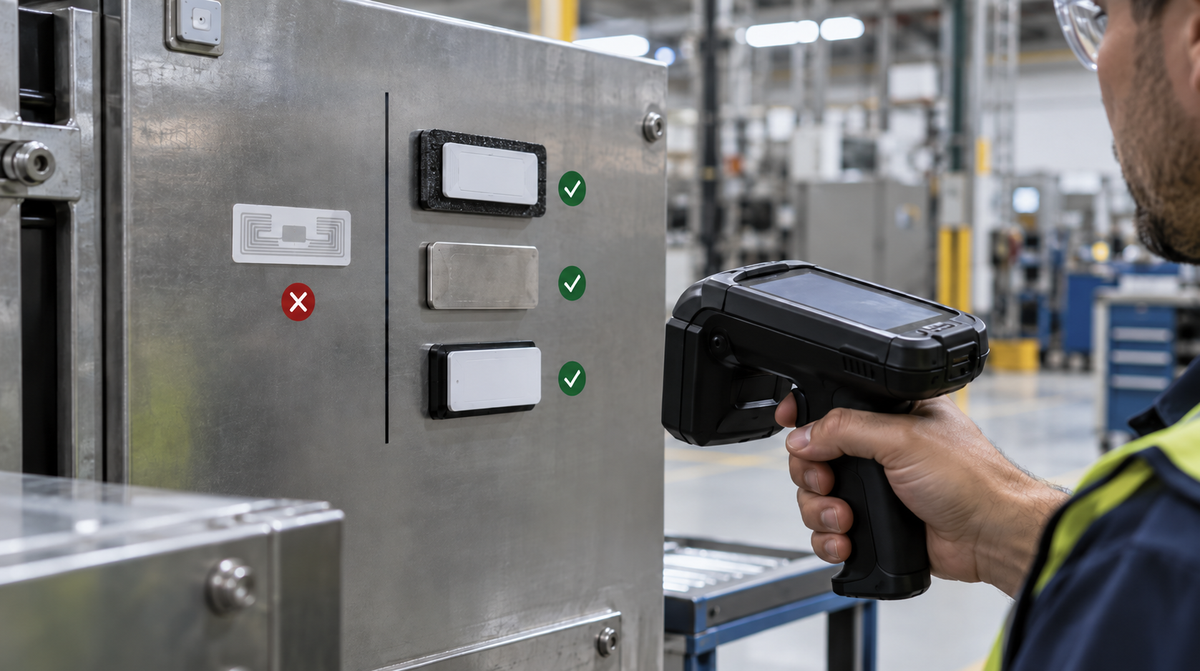
An RFID tag can work perfectly when it is tested on cardboard, plastic, or wood, then lose most of its read performance when it is attached to a metal asset.
When this happens, it is easy to assume the reader, antenna, or software is the problem. Often, however, the issue is much closer to the asset itself.
Metal changes the radio-frequency environment around an RFID tag. That can alter the way the tag's antenna receives energy and communicates with the reader. A standard tag that was not designed for direct use on metal may therefore produce a very short read range, inconsistent reads, or no useful read at all.
For businesses tracking tools, machinery, IT equipment, metal containers, or industrial components, understanding this before choosing a tag can prevent a great deal of unnecessary troubleshooting.
If the asset itself is metallic, the starting point should normally be an on-metal RFID tag specifically designed for use on metal rather than a standard RFID product.
Why Does Metal Affect RFID Tags?
An RFID tag depends on its antenna to interact with the radio-frequency field produced by an RFID reader.
The antenna is designed to operate under particular conditions. When a standard tag is moved from a non-metallic surface to a conductive metal surface, those conditions change.

Metal can reflect radio-frequency energy and change the electrical environment around the antenna. This can shift the antenna away from the operating point for which it was designed.
The result is commonly described as antenna detuning.
From the user's perspective, the symptoms are straightforward:
- A tag reads reliably before installation but poorly after it is mounted.
- The usable read distance becomes much shorter.
- Reads become dependent on position or orientation.
- The tag becomes difficult for the reader to detect consistently.
This is why a successful bench test on a desk does not automatically mean the same RFID tag will work on a steel machine, aluminium housing, or metal container.
Why Increasing Reader Power Usually Isn't the Real Fix?
A common reaction to a poor read is to increase the reader's transmit power.
That may sometimes change the result, but it does not solve the underlying problem when the tag itself is unsuitable for the metal surface.
If metal has changed the behaviour of the tag antenna, simply transmitting more power does not turn a standard tag into an on-metal tag.
It can also hide the real issue during an early test. A tag may appear to work when the reader is close and operating at high power but still become unreliable when the final system is installed across a warehouse, production area, or maintenance environment.
The better approach is to start with a tag construction designed for the application and then configure the reader and antenna system around the required workflow.
What Does an On-Metal RFID Tag Do Differently?
On-metal RFID products are specifically engineered to operate when mounted on or very close to metallic surfaces.
Their construction is designed so that the metal underneath the tag does not affect the RFID antenna in the same way that it would affect a conventional tag.
There are several ways manufacturers achieve this depending on the frequency, required dimensions, and application. The important point for a buyer is not simply the material used inside the tag. It is whether the complete tag has been designed and tested for the surface on which it will actually be used.
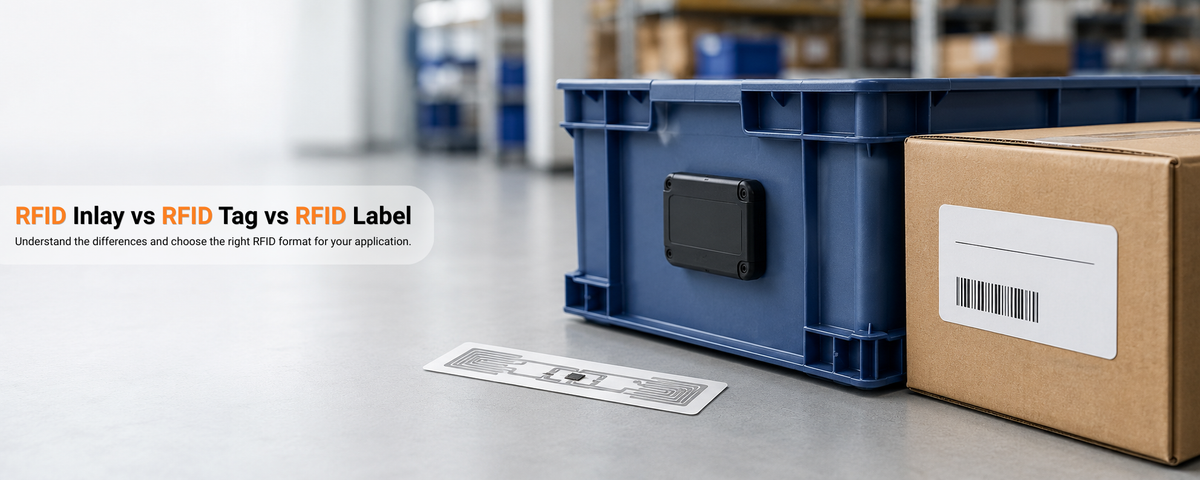
For industrial applications, this may mean a rugged hard tag attached with adhesive, screws, or rivets. Where mounting space is limited, a more compact PCB construction may make more sense. Where a low-profile printable format is required, an on-metal RFID label may be more appropriate.
Rather than selecting only by chip name, buyers should first define the asset, environment, and read requirement.
Where Do RFID-on-Metal Problems Commonly Appear?
Metal-related RFID problems are particularly common in environments where the assets being identified are themselves conductive.
Examples include:
- Manufacturing tools and machinery
- IT equipment such as servers and equipment housings
- Industrial containers
- Metal racks and cages
- Automotive components
- Railway equipment
- Reusable metal assets
- Fixed equipment
In many of these applications, RFID is being considered because manual identification is difficult or because businesses want faster asset checks, maintenance records, inventory visibility, or automated identification.
A poor tag choice undermines those benefits. If the tag cannot be read consistently once it is attached to the real asset, the rest of the RFID system cannot compensate reliably for that limitation.
For manufacturers evaluating RFID for tools, work-in-progress, containers, or production equipment, it is therefore worth considering the surface material during the first stage of tag selection rather than after the system has been designed.
What Should You Check Before Choosing an RFID Tag for Metal?
The correct tag is not determined by the word "metal" alone.
Two metal applications can require completely different RFID products.
A useful selection process starts with the following questions.
What Is the Asset Made From?
Steel, aluminium, painted metal, mixed-material products, and small metallic components can behave differently.
The size and geometry of the object also matter. A tag tested on a large flat steel plate may not perform identically when mounted on a small curved tool or narrow metal component.
What Read Distance Do You Actually Need?
A maintenance technician tapping a tag with a phone has a very different requirement from a portal attempting to identify equipment several metres away.
Define the operational read point before comparing tag specifications.
Which RFID Frequency Fits the Workflow?
TRC's current on-metal range includes both UHF and NFC/HF options.
UHF is commonly considered where longer-range or automated identification is required. NFC/HF can make more sense for controlled close-range interactions, inspections, or workflows where a compatible mobile device is part of the process.
The frequency decision should therefore follow the business process rather than simply following what has been used elsewhere.
How Much Mounting Space Is Available?
A large industrial tag may offer the construction required for a demanding environment but be impractical on a small tool.
Compact assets may require smaller specialist formats such as PCB on-metal tags .
How Will the Tag Be Attached?
Depending on the tag and asset, mounting options can include adhesive, screws, rivets, or other mechanical methods.
The mounting method matters for both RFID performance and long-term reliability.
What Conditions Will the Tag Experience?
Consider moisture, cleaning, temperature, vibration, impact, outdoor exposure, and chemicals where relevant.
A tag that performs correctly in an office test may not necessarily be the correct construction for a production line, maintenance workshop, or outdoor installation.
Hard Tags, PCB Tags or On-Metal Labels?

Not every metal application needs the same physical RFID format.
A hard on-metal RFID tag can be appropriate where durability and secure mounting are important.
A PCB on-metal tag can suit compact industrial assets and restricted mounting spaces. TRC has a dedicated guide explaining PCB on-metal tag construction and applications for readers who need more technical detail.
An on-metal RFID label may be preferable when the application needs a lower-profile or printable label-style format.
The important point is that "works on metal" describes a requirement, not a single universal product.
A Practical Test Before You Roll Out
One of the simplest ways to reduce RFID deployment risk is to test candidate tags on the real asset before committing to a larger order.
Do not test only with the tag held in the air.
Mount it in the position where it will actually be installed. Use the reader, antenna, and expected operating distance for the final application.
Then test from the directions and positions that occur in the real workflow.
For example, if a tagged tool will be read as it enters a cabinet, test that movement. If a machine is scanned during maintenance, test the position a technician will actually use. If a metal container passes a fixed antenna, reproduce that route.
The asset surface, tag position, surrounding environment, and required read range can all affect the result.
Testing a small number of representative assets usually provides more useful information than choosing a tag solely from its theoretical maximum read range.
Frequently Asked Questions
1. Do RFID Tags Work on Metal?
Yes, but the RFID product should be designed for that environment. Standard tags that work correctly on cardboard, plastic, or other non-metallic surfaces can lose significant performance when mounted directly on metal.
2. Why Does Metal Interfere With RFID?
Metal changes the RF environment around the tag and can alter the behaviour of its antenna. This can reduce energy transfer, change antenna tuning, and shorten the usable read range.
3. Can I Simply Increase Reader Power?
Increasing power may change the observed read distance, but it does not correct an unsuitable tag construction. Tag choice, mounting position, reader configuration, and the actual asset should be evaluated together.
4. Should I Choose UHF or NFC for a Metal Asset?
It depends on the required workflow. UHF is generally considered for longer-range or automated identification, while NFC/HF is better suited to close-range interactions.
The correct choice depends on reader type, required distance, and how users interact with the asset.
5. Should I Use an On-Metal Tag or an On-Metal Label?
Use the physical format that fits the application. Rugged hard tags are often selected for industrial assets and durable mounting. On-metal labels can be preferable when a thinner or printable format is required.
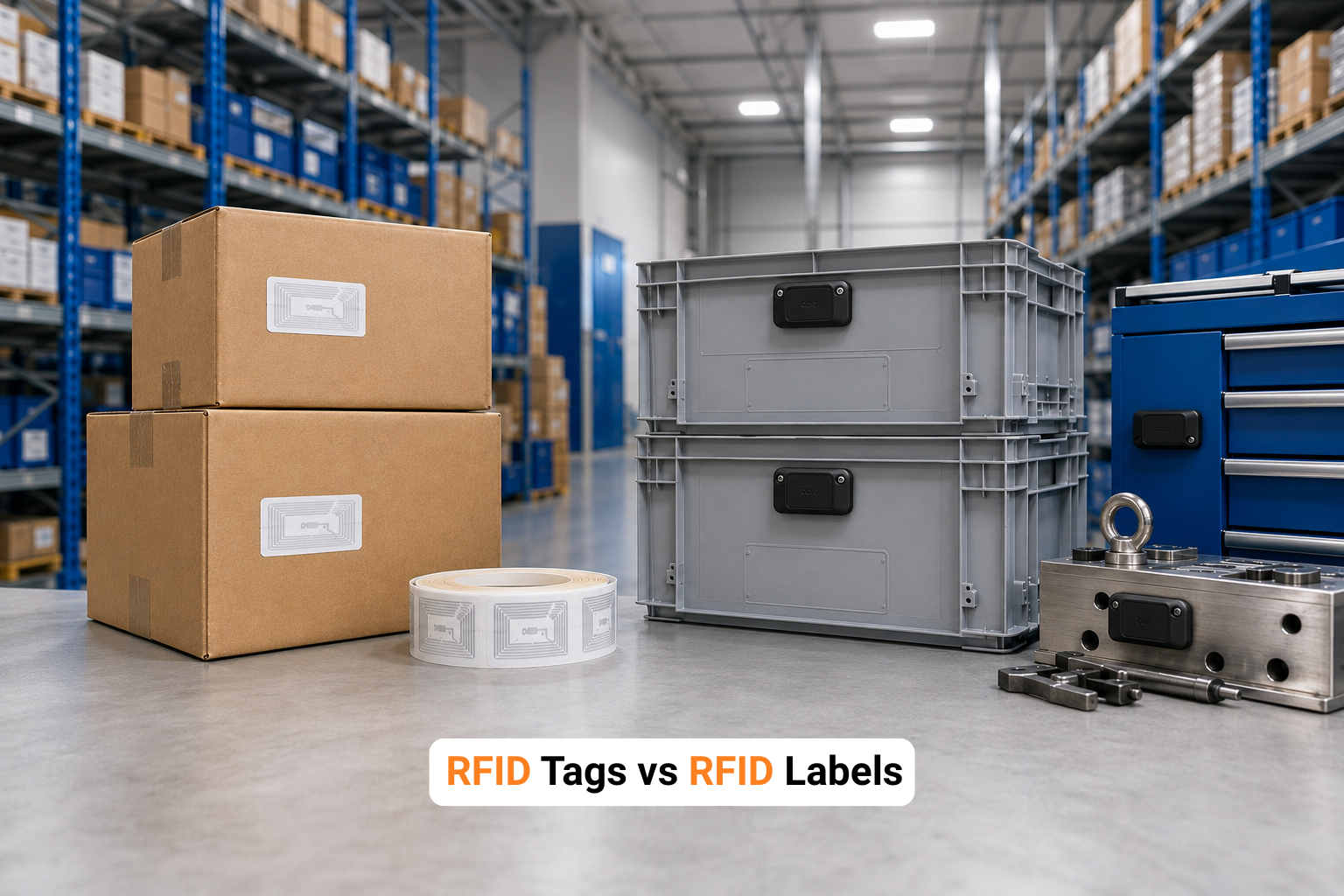
For a broader explanation of these physical differences, read our guide: RFID Tags vs RFID Labels: What's the Difference?
Conclusion
When a standard RFID tag stops reading after it is attached to metal, the problem is not necessarily the reader.
The metal surface may have changed the operating conditions around the tag antenna.
The reliable solution starts with choosing an RFID product intended for the actual surface and workflow, then testing it on the real asset before rollout.
For metal tools, machinery, IT equipment, containers, and other conductive assets, compare on-metal RFID tags according to frequency, dimensions, mounting method, operating environment, and required read distance rather than selecting by chip or price alone.

Share:
How to Reduce Inventory Mistakes with RFID: A Simple 2026 Guide for Warehouses