
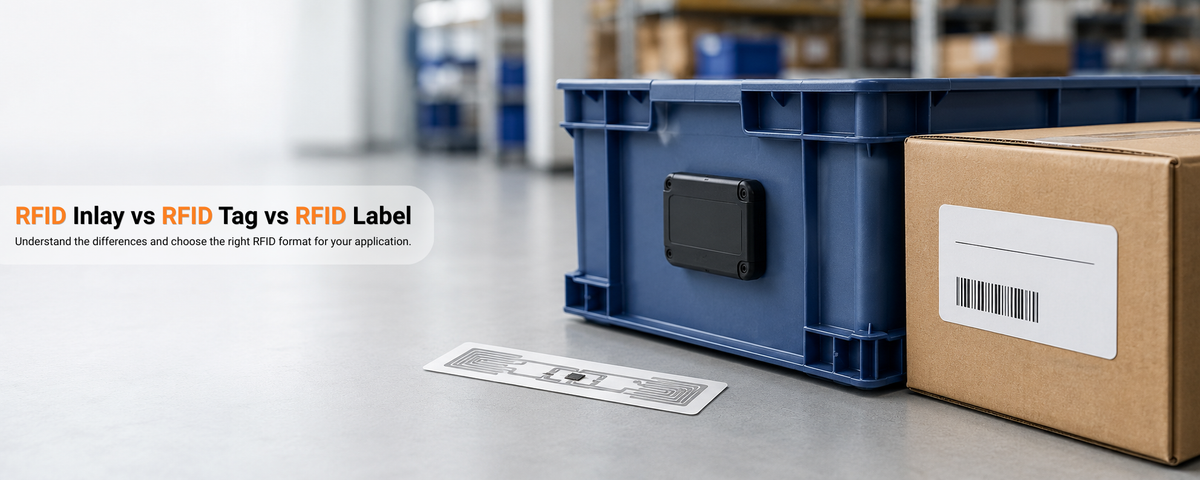
Almost all RFID projects start from the following key question: Do you require an RFID inlay, RFID tag or RFID label? Even though all these products often confuse people because of their similarity, they are different products indeed. Selecting the wrong product may affect the reading distance, durability, printing, cost, and performance of your RFID technology.
In this paper we are going to talk about RFID inlay vs. RFID tag, RFID tag vs. RFID label and RFID inlay vs. RFID label. The target group of this research is European organizations using RFID technology for packing, logistics, asset management, retail, laundry, RTIs, equipment, etc.
What Is an RFID Inlay?
The RFID inlay is the active component of many RFID products. It features an RFID chip and antenna on a thin carrier material. The chip stores information The antenna makes it possible for the object to communicate with an RFID reader.
Rarely are inlays the final product. They are converted to RFID labels, cards, tickets, tags or other finished RFID solutions. The inlay is like the engine of the final product.
For example, UHF inlays are used in logistics, retail and packaging because they support longer read ranges. HF and NFC inlays are used for close-range interaction, authentication and mobile scanning.
Wet Inlay vs Dry Inlay
Wet Inlay vs Dry Inlay: Difference. The difference between a wet inlay and a dry inlay is simple.
A dry inlay holds the chip and antenna on a carrier, but without an adhesive layer. Usually used by converters or manufacturers that will use it in another product.
A wet inlay is sticky, so it can be stuck to a surface or made into a label. Wet inlays are more like a finished product but still could require printing, face material, liner selection or protection.
For most end users, buying only an inlay is not the best when not coupled with the proper conversion, encoding, testing and application process.
What Is an RFID Tag?
The RFID tag is an actual RFID label that is put to use for items, assets, containers, machines, garments, or transport items. An RFID tag consists of an RFID microchip and antenna. However, the RFID tag is built with sturdier construction than labels in general.
Types of RFID Tags There are numerous types of RFID tags, such as hard tags, on-metal RFID tags, asset tags, NFC HF tags, RFID laundry tags, passive UHF RFID tags, and others. The type of RFID tag will vary depending on surface, surroundings, distance from readers, temperature conditions, chemicals, wash cycles, stresses, and longevity.
In cases when robust construction is vital and low price is not a top priority, one would use RFID tags. Examples include metal tools, warehouse cages, beer kegs, hospital laundry items, and reusable transport crates.
What Are RFID Labels?
An RFID label is composed of a label that has been printed on an RFID inlay. It may contain text, barcodes, logos, serial numbers, QR codes, and many other types of information about the product, which can be easily scanned through RFID reader technology.
There are some sectors which commonly employ RFID labelling techniques, like packaging, logistics operations, retailing, asset management, and warehousing. Use of UHF RFID labels and printable RFID labels has become common practice due to the dual capability of these labels.
RFID Inlay vs RFID Tag
Comparing an RFID inlay vs an RFID tag, the main difference is that the inlay is a component, and the tag is usually a finished product.
An inlay is a thin, basic, conversion type. A tag is ready for application and real-world use. If you are developing an RFID product, buying inlays might be an option. RFID tags are generally better if you want to track assets, containers, tools, garments or equipment.
RFID tags can be made of plastic, ceramic, silicone, epoxy or other materials and have better mechanical protection.
RFID Tag vs RFID Label
The RFID tag vs RFID label comparison focuses more on durability and the use-case environment.
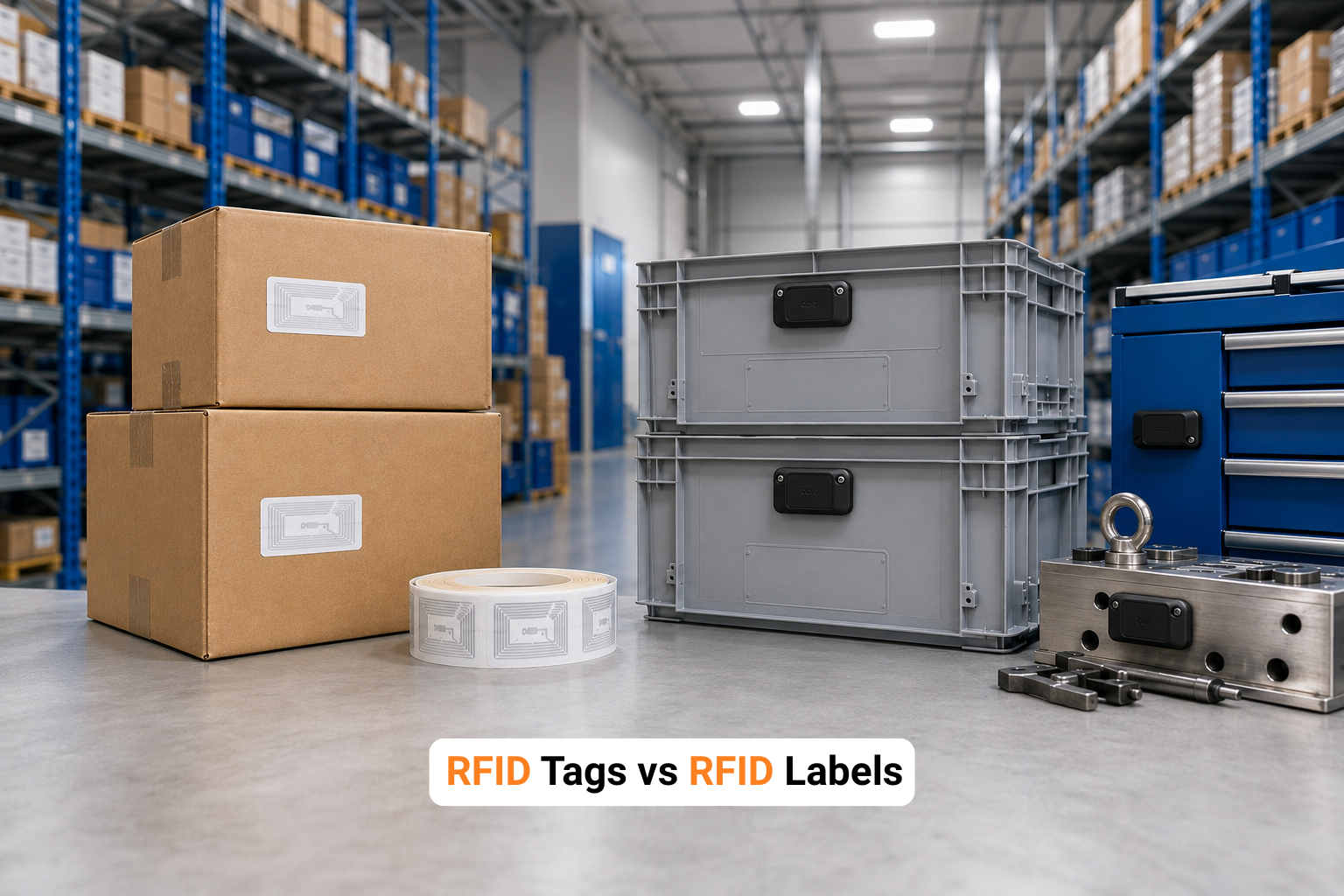
In environments where the item is smooth, clean, and controlled, then it is suitable to use RFID labels on items such as cartons, pallets, paperwork, consumer goods, pharmaceutical packing, and logistics operations.
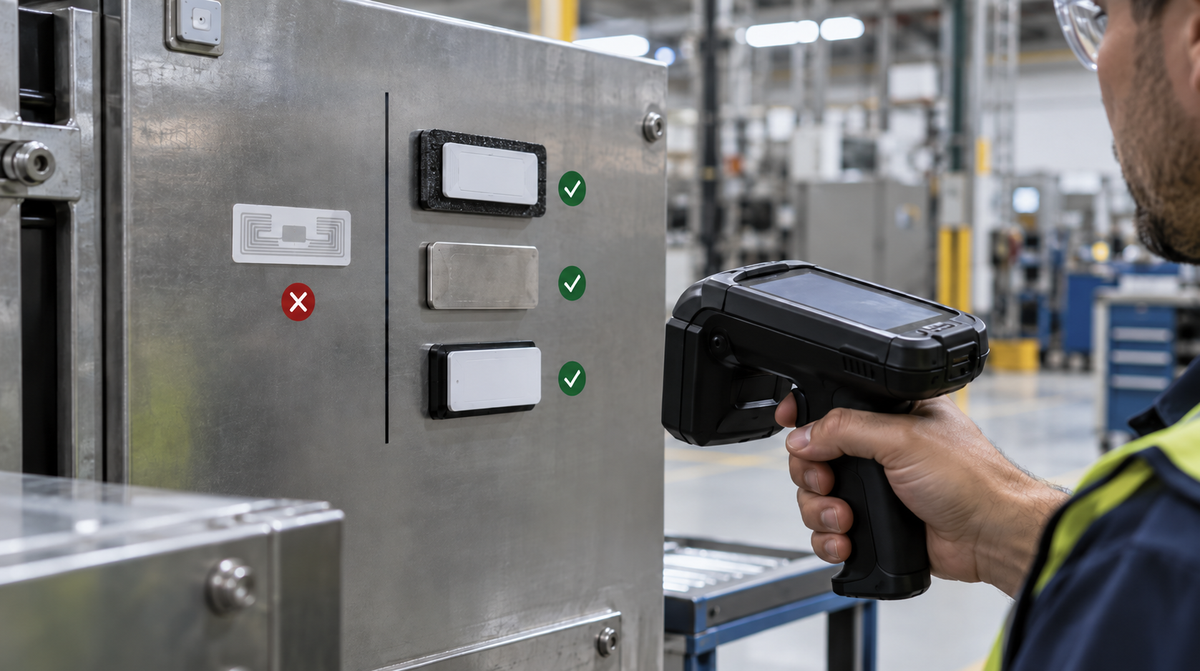
On the contrary, it is advised to implement RFID tags on articles that tend to encounter metal objects, moisture, heat, pressure, inclement weather conditions, washing, and handling. Such examples may include on-metal RFID tags, which can function effectively on metal surfaces compared to ordinary labels.
Therefore, when do you use RFID tags against labels? Labels are used where there is a need for scalability, printability, and low cost of identification; RFID tags are used when there is a need for durability and resistance.
RFID Inlay vs RFID Label
RFID inlay vs RFID label is a common question because labels have the inlays. The inlay offers the RFID functionality, and the label adds usability.
A label can consist of a printable face stock, adhesive, liner, top coating, die-cut shape and protection. This can easily be printed, encoded, applied, and scanned in daily routines.
RFID tags are usually more practical than simply buying inlays when your team needs something ready to be packaged or identified as a product.

How to Choose the Right RFID Format
It all begins with the application rather than the name of the item itself:
Is it going to be placed on what at first glance? Metals, plastics, cardboard, textiles, glass, and wood react differently.
For how long should it last? What is needed to mark one-way transport packages cannot be compared to reusable shipping boxes.
Is it going to face heat, humidity, chemicals, washing, abrasion, and external exposure?
Labelling, brand recognition, barcodes for backup, and human-legible data?
How many reading operations should be performed, and will they be done individually or in volume?
Supplier expertise becomes important in cases with European businesses. Looking for trusted RFID label providers in Europe, you will notice that such companies can give advice about your chip, antenna design, materials compatibility, and printing technologies.
Common Use Cases
UHF RFID tags are widely used for retail stock control, warehouse inventory, carton tracking and pallet identification.
On-metal RFID tags are used for tools, IT equipment, industrial machinery, metal containers and maintenance assets.
Tamper-proof RFID labels are useful for a business that needs to show that something has been removed or tampered with, like sealed packages, warranty items, and controlled goods.
Returnable Transport Items (RTI) labels apply to returnable transport items such as crates, totes, trays, bins and containers.
RFID laundry tag applications involving hotels, hospitals, uniforms, and reusable textiles which need to be laundered repeatedly utilise RFID laundry tags.
In Europe, organisations are seeking out products that have a lesser environmental impact, recycled packaging, and green logistics practices, thus making environmentally sustainable RFID labels relevant.
Conclusion
Readiness, durability and use are the differences between an RFID inlay, tag and label. The technical component is an RFID inlay. An RFID label is a printable, adhesive format built on an inlay. An RFID tag is usually a more robust end product for harsher environments.
RFID labels may be the most efficient means of packaging or carton tracking. RFID tags are often safer for metal assets, laundry, returnable containers, or harsh industrial use. Inlays can be the first step for product developers or converters.
The RFID Company can assist European businesses in comparing RFID tags, RFID labels, on-metal RFID tags, NFC/HF tags, asset tags, sustainable RFID labels, tamper-proof RFID labels, RTI labels, UHF RFID labels, and RFID laundry tags. Not sure which format meets your project's needs?
Request a quote and tell us about your application.
FAQs
1. What is the difference between an RFID inlay, tag and label?
An RFID inlay is an antenna and a chip. An RFID label is an adhesive label with an inlay that can be printed. An RFID tag is an RFID product that is pre-made, usually for more durability or special environments.
2. Differences Between RFID Tags & RFID Labels?
No, not necessarily. Labels may also be referred to as tags, but the fact of the matter is that RFID labels can generally be described as printables and stickers, whereas RFID tags can come in other forms such as metal, hard, washable, or even mounted types.
3. When Do I Use an RFID Label?
When the surface of the item/package/shipment allows it and the environmental conditions are conducive enough, then it is best to use RFID labels.
4. When Do I Use RFID Tags?
Use RFID tags when your item is made up of metal, is washable, used outdoors, chemical resistant, durable enough, etc.
5. Are passive UHF RFID tags good for logistics?
Yes. Passive UHF RFID tags and labels are commonly used in logistics because they enable bulk reading and longer read ranges without the use of a battery.
6. Are RFID labels printable?
Yes. RFID barcodes, QR codes, product data, serial numbers and branding can still be read by RFID-printable RFID labels.
7. Do RFID tags work on metal?
Standard labels usually work badly on metal. If the surface is metal, then use on-metal RFID tags or special on-metal labels.
8. Which RFID option is best for European companies?
The best choice depends on the item, surface, environment, read range and lifetime. Most companies find it hard to go wrong with testing samples prior to rollout.
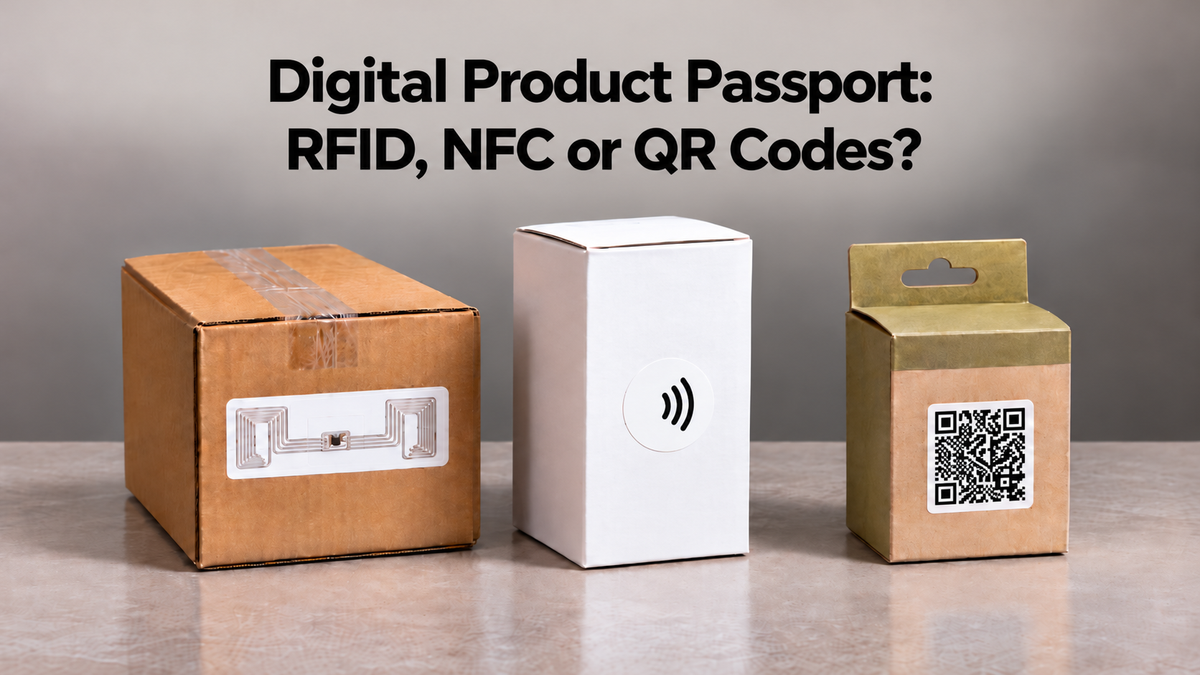

Share:
How to Choose UHF RFID Labels: Read Range, Surface & Applications
RFID Tags vs RFID Labels: What's the Difference?