

Errors in tracking metal assets using standard RFID labels often lead to inconsistent reads, poor signals, and operating errors. This is attributed to the fact that metal absorbs radio waves, hence disrupting the normal functioning of RFID.
In this case, UHF on-metal RFID labels are required. This guide contains the explanation on how the UHF RFID metal surface labels operate, their difference, and the way you can choose the optimal variant depending on your business in Europe and the Netherlands.
What Are UHF On-Metal RFID Labels?

UHF on-metal RFID labels are specifically designed RFID labels that are used on metal surfaces directly without interfering with the signal. They are tuned for the European band (865–868 MHz) and function in the UHF frequency range (860–960 MHz).
On-metal RFID labels, as opposed to standard RFID labels, consist of:
- A protective insulating layer
- Antenna tuning for metal compatibility
- Shielding material to prevent signal reflection
These labels are widely used in asset tracking, warehouse management, industrial equipment monitoring, and logistics operations.
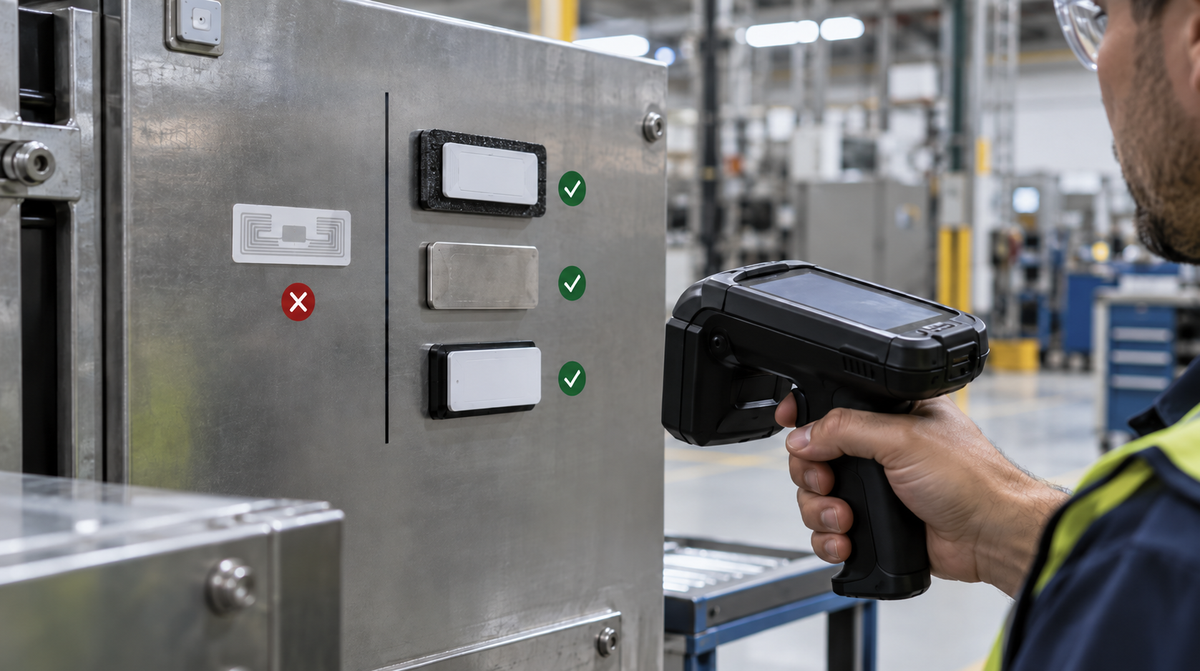
Why Standard RFID Labels Do Not Work on Metal?
Examples of non-metallic surfaces on which standard RFID labels are fabricated are paper, cardboard, and plastic. When set on metal:
- Radio waves reflect
- Signal strength drops
- The read bandwidth decreases tremendously
- Missed or false readings happen
For tracking metal assets, this renders standard RFID labels unreliable. UHF on-metal RFID labels are required if your application includes tools, machinery, IT equipment, containers, or industrial assets.
How Do UHF On-Metal RFID Labels Work?
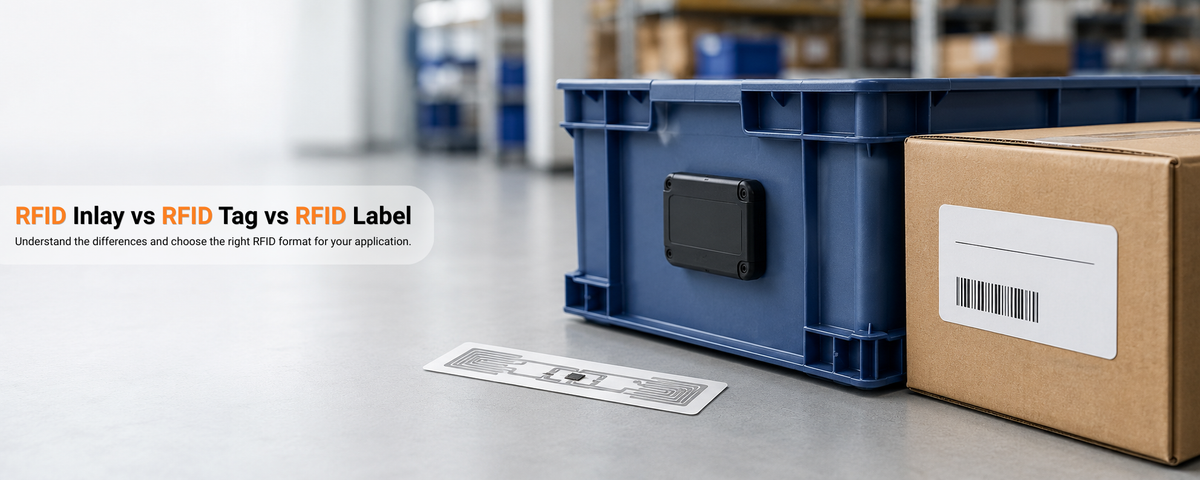
Standard RFID labels are not engineered the same way as UHF on-metal RFID labels. They include:
- Layer of Insulation: The metal surface and the antenna are secluded by a foam or spacer layer.
- Tuned Antenna Design: The antenna is highly calibrated to keep working close to metal.
- Protection Technology: Stabilizes the performance in reading and prevents electromagnetic noise.
These features provide reliable read distances of 1 to 10 meters depending on the type of label and the power of the reader. The majority of labels are:
- UHF passive (no battery required)
- Compliant with EPC Gen2
- RAIN RFID system compatible
Key Factors to Consider When Selecting UHF On-Metal RFID Labels
To be effective, one should choose the right label. Consider the following:
- Required reading range: IT assets have a short range (1-3 meters). Warehouse and logistics require long range (5-10 meters).
- Type of Surface: Consider whether you are applying them to flat metal panels, curved metal pipes, or painted or coated metal.
- Environmental Conditions: Account for environments with high temperatures, outside exposure, or exposure to chemicals or moisture in industrial environments.
- Label Thickness & Size: While larger assets can support thicker, long-range RFID labels, smaller assets need smaller ones.
- Durability & Adhesiveness: Look for a permanent industrial adhesive, heat-resistant options, and tamper-proof designs.
-
European Frequency Compliance: Verify that the RFID label conforms with CE standards and supports the 865-868 MHz European UHF band. This is something that should be considered by businesses that are operating in the Netherlands and all over Europe.

Companies in Europe utilize these labels to enhance asset visibility, reduce manual scanning, and increase automation.
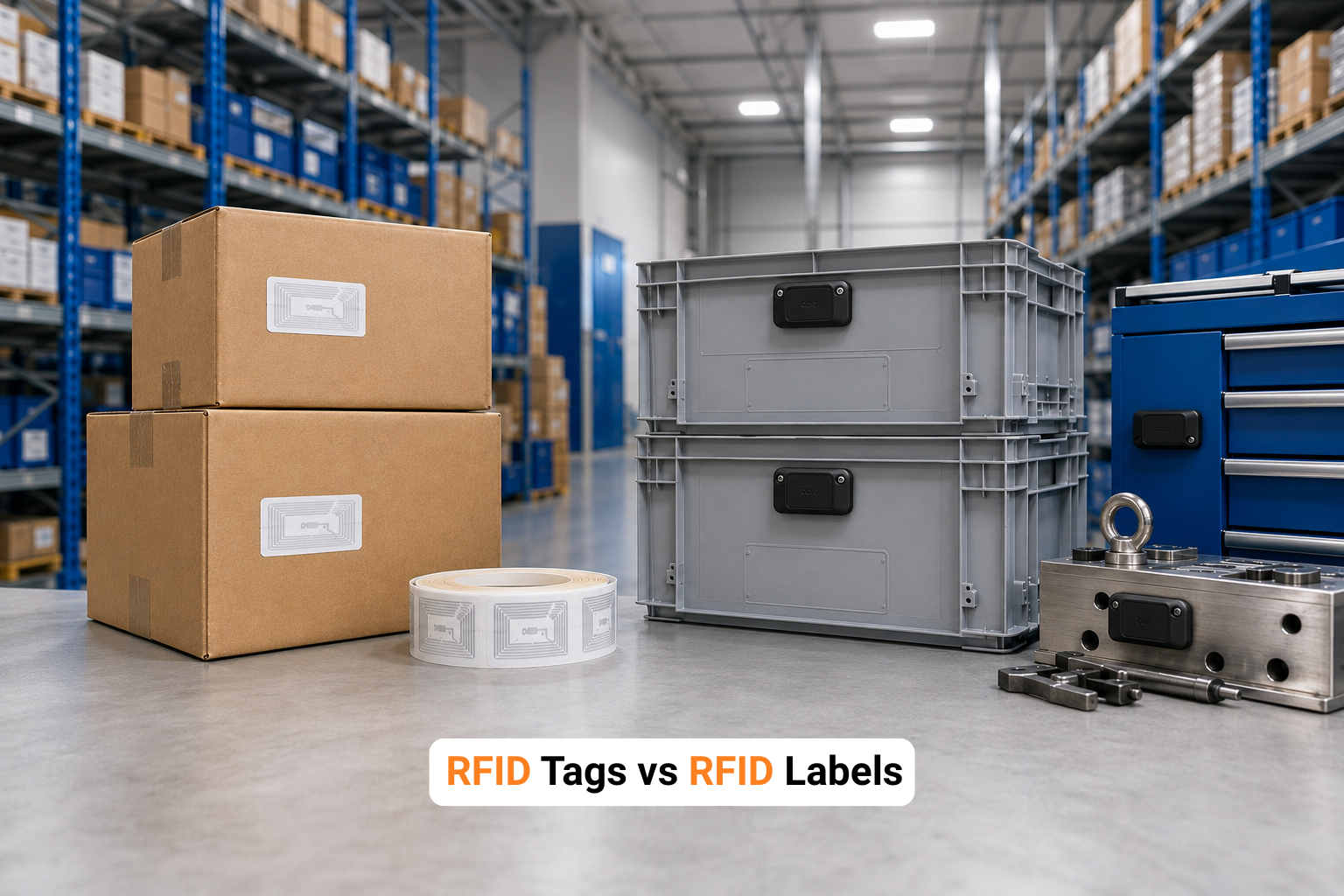
UHF On-Metal RFID Labels vs Standard RFID Labels
| Feature | Standard RFID Labels | UHF On-Metal RFID Labels |
|---|---|---|
| Works on metal | No | Yes |
| Signal stability | Low | High |
| Read range on metal | Poor | Optimized |
| Industrial durability | Limited | High |
| Ideal for | Plastic/Cardboard | Metal Assets |
For any metal surface application, on-metal RFID labels are the only reliable solution.
Choosing a Reliable UHF RFID Label Supplier in Europe
While picking the appropriate RFID label is important, picking the right supplier is just as crucial, similar to The RFID Company BV. The following qualities should be sought in a European UHF RFID label supplier:
- European Frequency Compliance: Labels tuned for the EU standard of 865–868 MHz should be provided by the supplier.
- Personalisation Potential: Look for personalised sizes, services for pre-encoding, and options for printing and branding.
- Experience in the Industry: Choose a supplier with experience in logistics, manufacturing, retail, and asset tracking solutions.
- Quick Shipping Throughout Europe: Ensure reliable shipping within the Netherlands, Germany, Belgium, France, and other EU countries.
- Support for Technical Issues and Testing of Samples: Before placing large orders, reputable suppliers offer sample testing.
Long-term scalability, performance dependability, and compliance are guaranteed when working with an experienced European RFID partner.
Last Checklist for UHF On-Metal RFID Label Purchases

Before placing an order, confirm:
- Metal compatibility
- Required read range
- Environmental resistance
- Support for EU frequencies
- Adhesive durability
- Availability of sample testing
Selecting the appropriate UHF on-metal RFID label increases automation efficiency, lowers operational errors, and improves tracking accuracy.
Frequently Asked Questions
Q: Can UHF RFID labels work directly on metal?
Standard labels cannot. Only UHF on-metal RFID labels are designed for direct metal application.
Q: What is the read range of on-metal RFID labels?
Typically between 1–10 meters, depending on label design and reader configuration.
Q: What frequency is used for RFID in Europe?
The European UHF RFID frequency band is 865–868 MHz.
Q: Are UHF on-metal RFID labels waterproof?
Many industrial-grade labels are waterproof and resistant to harsh environments.
Conclusion
UHF on-metal RFID labels are essential for reliable metal asset tracking. Standard RFID labels fail on metal due to signal reflection, but specially engineered on-metal labels maintain strong read performance.
For businesses operating in Europe and the Netherlands, choosing EU-compliant labels and an experienced RFID supplier ensures long-term tracking efficiency and regulatory compliance. If you are evaluating UHF RFID labels for metal surfaces, testing the right specification for your environment is the first step toward accurate and automated asset management.

Share:
RFID In Laundry Management: Smarter, Affordable Operations
RFID Cards Explained: Security, Standards, Access Control, and Everyday Uses