
RFID in retail: Complete guide
There is a lot of change in the retail sector in Europe. Customers demand information about stock, rapid delivery, return policy, and ease of moving from online transactions to the physical store environment. Retailers have to automate processes, prevent shrinkage, and control inventory in their warehouse, stockroom, and the store itself.
That's when RFID applications in retail become important. In contrast to bar codes, RFID provides identification of multiple products simultaneously without requiring any visual contact.
RFID technology may be used in apparel, footwear, electronics, cosmetics, and general merchandise retailing.
What are RFID tags in retail?
An RFID tag is a type of device that consists of a chip and antenna. The chip holds the unique ID code, while the antenna facilitates communication between the tag and RFID reader.
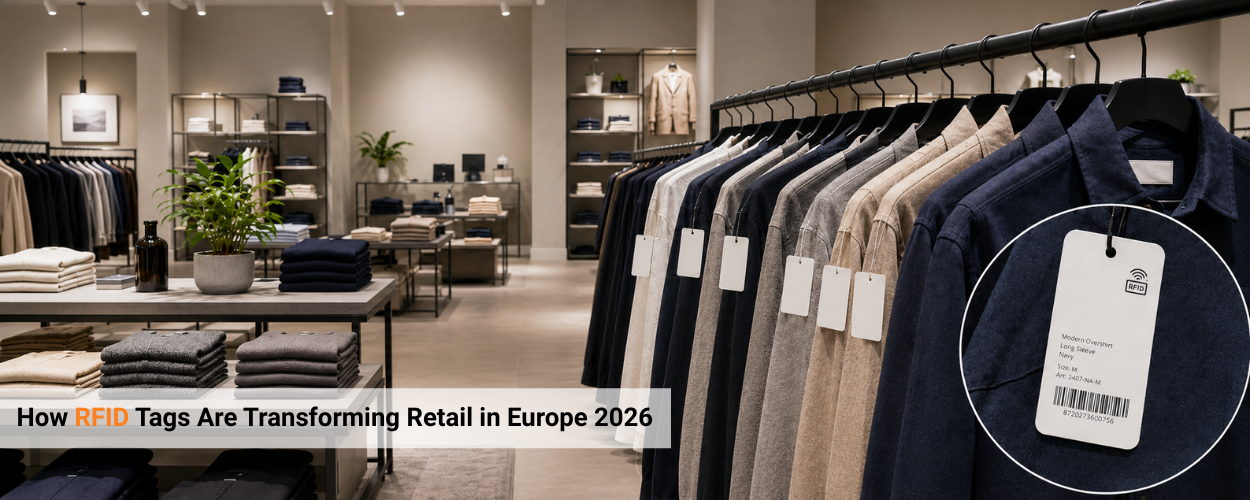
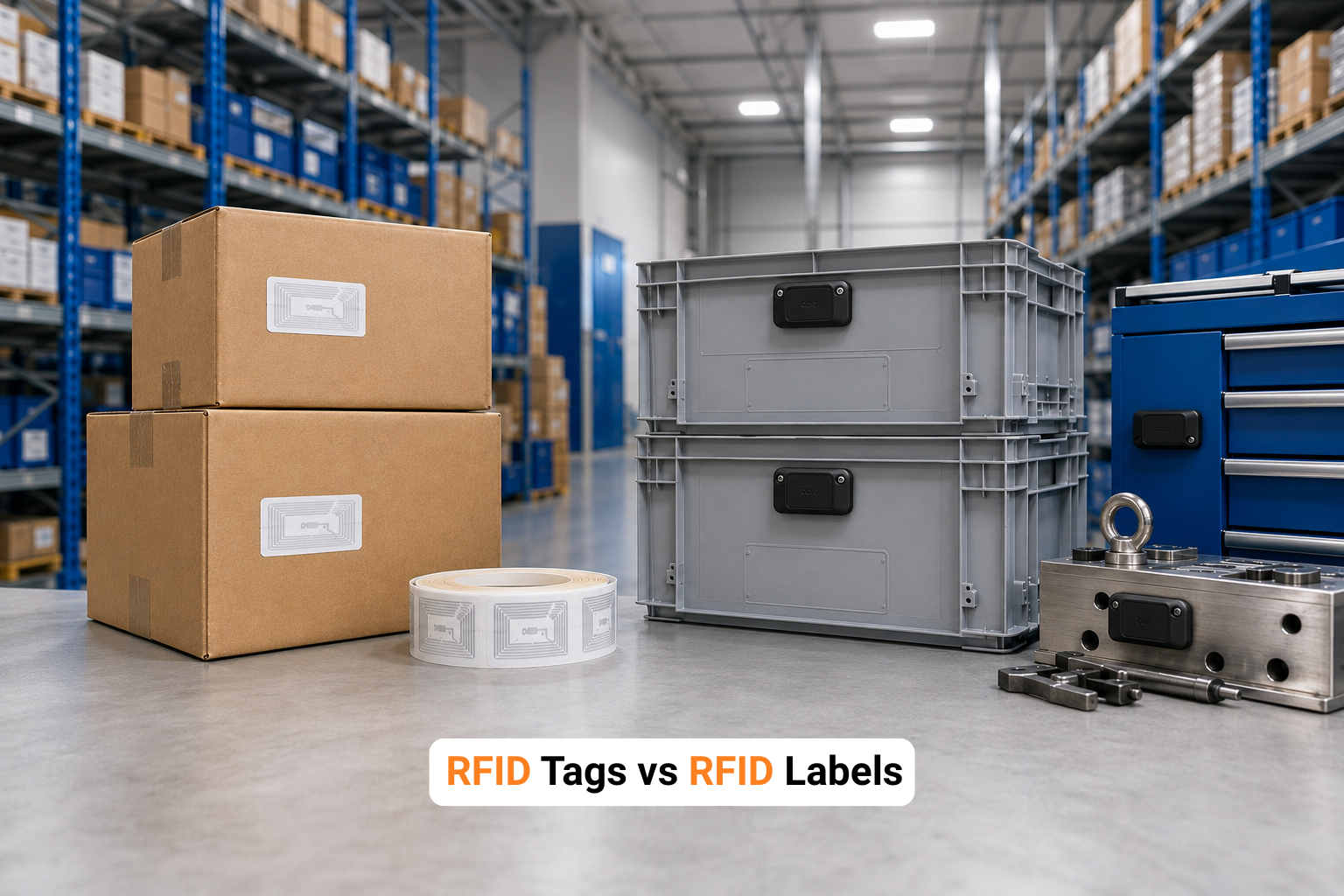
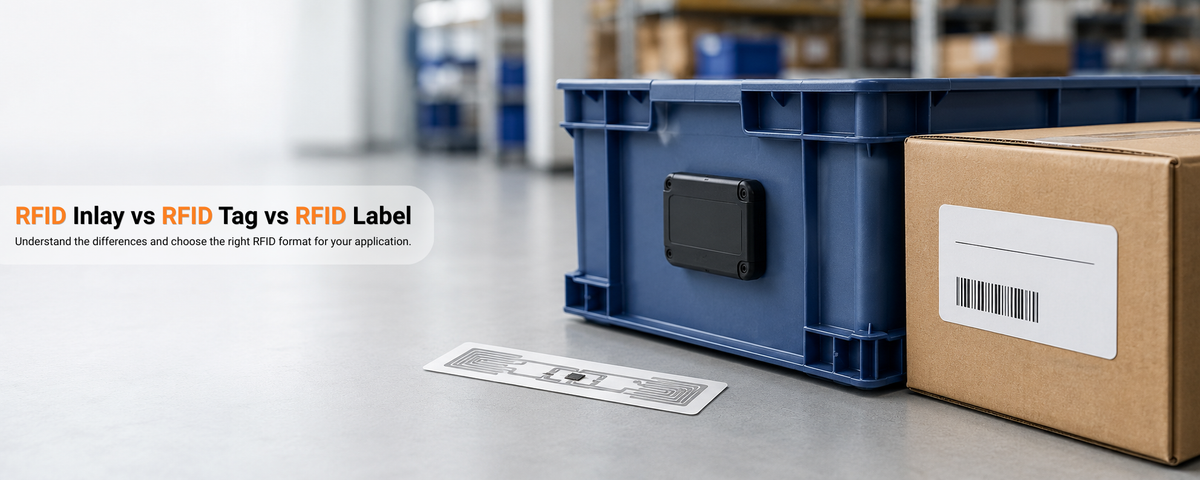
In a retail setting, the tag is fixed either to an individual item, a carton, a durable asset or store equipment. These tags can take different forms, like hang tags, care labels, adhesive labels, packaging labels or durable asset labels.
The primary advantage of RFID tag usage in the retail sector is that the items get counted simultaneously. This improves stock counting, restocking, check-out assistance, returns and store transfers compared to manually scanning barcodes on multiple items. Both RFID and barcodes are common technologies used by retail establishments for the same product label.
Why Are EU Retailers Adopting RFID?
Retailers in Europe are facing challenges in managing their inventory better through stores, online, and warehouses. The use of manual systems can cause inventory mistakes, loss of stock, and inefficient replenishment. RFID technology can assist because each product will have its digital signature.
Inventory Accuracy
The importance of inventory accuracy is one of the main driving forces for implementing RFID technology among retailers. With barcodes, it is required to find and scan items separately when employees use a bar-code scanner.
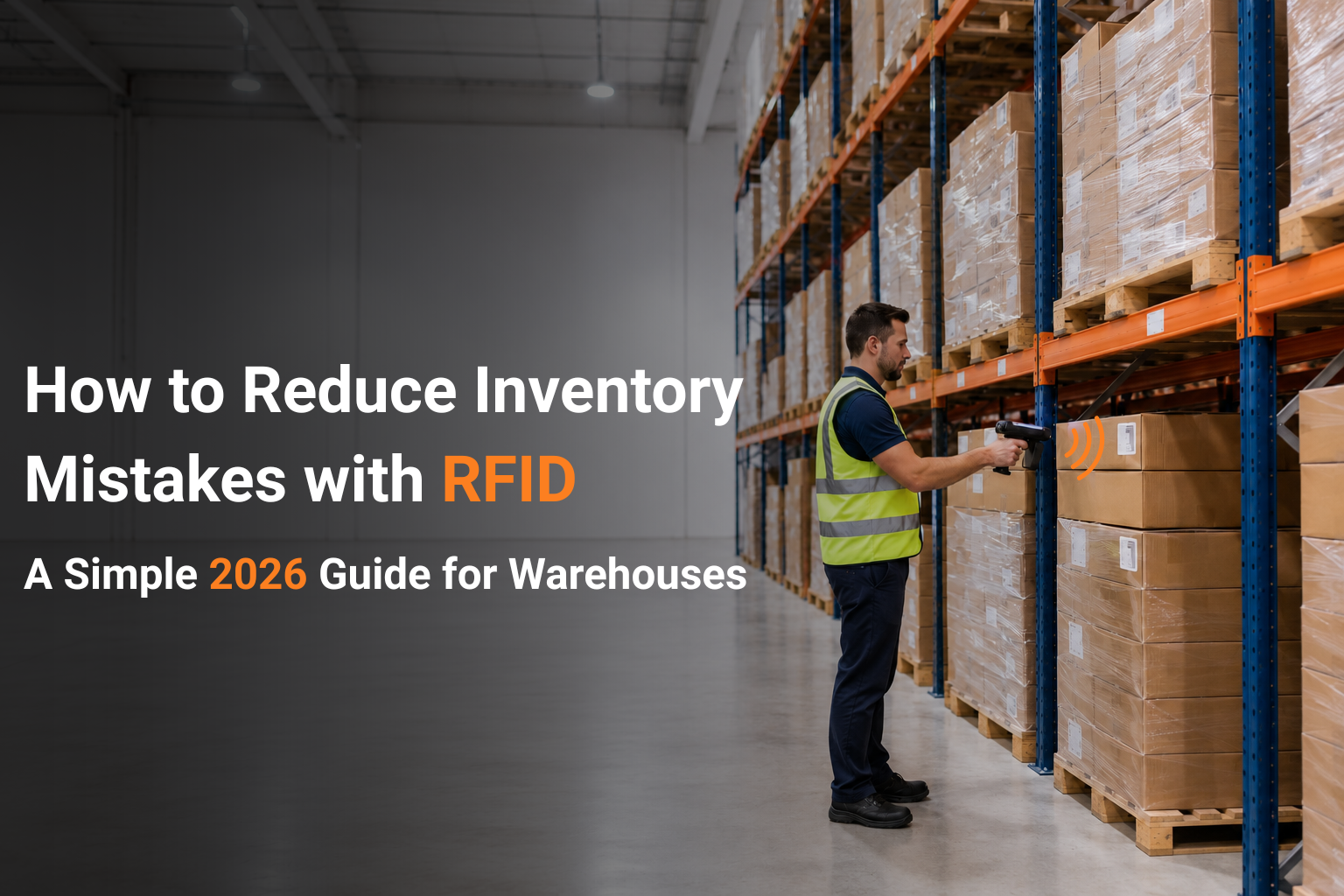
In retail, thanks to the RFID technology, the scanning of items placed on shelves, racks, and in boxes becomes easier because they are scanned using a mobile device or stationary RFID reader.
Loss Prevention
Retail shrinkage results from stealing, misdelivery, wrong transfer, return frauds, lost goods, or even mistakes in receiving the order. Using RFID makes it possible to track the location of goods and see where losses occur.
When RFID tags are placed on goods in receiving, storage, the retail floor, the point of sale, return processing, and transfer points, the company obtains more accurate tracking information. Although this does not make a security system fully redundant, it offers additional visibility.
Omnichannel
Accurate inventory information is critical for omnichannel retailing. Consumers have the ability to confirm the availability of products.
online, book products, collect them offline, or receive speedy deliveries of the nearest stock location.
The use of RFID tags in retail ensures increased availability of the goods. Employees will find it easy to locate products, complete click-and-collect orders faster, and minimise selling unavailable products.
Use Cases
RFID tags' retail applications are useful across apparel, footwear, electronics, beauty, sports, luxury and home goods.
Apparel Tracking
Among the industries using RFID technology, apparel ranks highly. This industry deals with clothes of various colours, styles, and sizes, making stock management complicated.
With the help of RFID tags on clothes, the retail companies are able to do stock checks easily, detect missing sizes, and make replacements.
Smart Fitting Rooms
Smart fitting rooms utilise RFID readers that determine what merchandise the consumer places in the room. The system has the capacity to display product information, sizes, similar merchandise, etc. on a screen.
Checkout Automation
Checkouts may be made quicker due to RFID since several products can be tagged simultaneously. The process will not require the scanning of each product individually. Instead, RFID tags allow for assisted checkouts, self-service checkouts, returns and order confirmations.
In order for checkout processes to be automated effectively, testing of the configuration is vital.
Asset and Fixture Tracking
Also, tracking non-discount assets like display kiosks, return bins, shopping carts, IT equipment, and shelves is necessary for retailers.
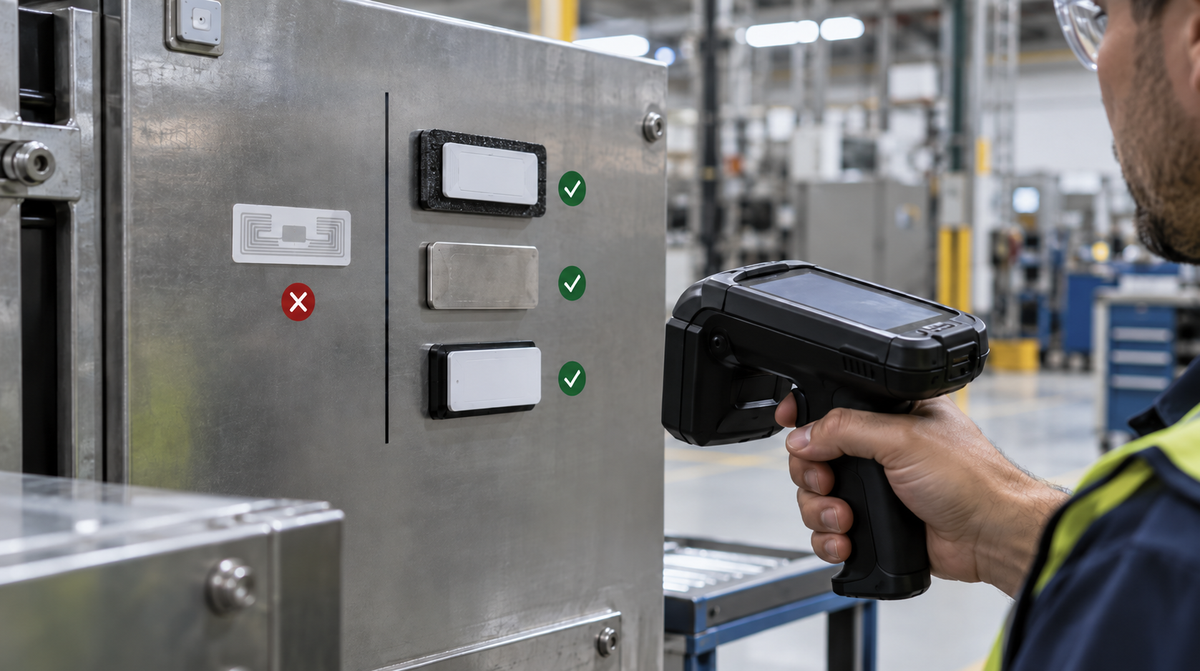
RFID technology can assist retailers in monitoring their non-discount assets effectively. In cases where a retailer wants to monitor metal surfaces or equipment, it will have to employ on-metal RFID tagging since conventional RFID tags do not function properly on metal.
Benefits for Retailers
Reduced Shrinkage
In addition, shrinkage can be minimised by enhancing visibility throughout the entire cycle of the item. The tag on the item allows for tracking the product from the receiving point up to the storing, sales floor, and even the checkout point and transfer point.
However, when there is missing inventory, RFID will assist in identifying if the problem was due to bad receipt, bad transfer, missing returns, bad placements, or theft.
Real-Time Stock Visibility
Knowing what is available, where it is kept, and when restocking will be necessary is crucial for retailers. RFID helps to perform regular and quicker stock audits, helping to maintain current inventory information.
Higher visibility improves procurement, replenishment, online availability, and transfers between stores.
RFID VS Barcode in Retail

Bar codes are easy, economical, and efficient in identifying products. Nevertheless, they need a direct line of vision and usually are scanned one object after another.
RFIDs, on the other hand, provide automation. It is possible to scan several objects using this technology at one point in time and without line-of-sight scanning. This feature allows RFID to be used in cycle counting, bulk receiving, checkouts, returns, and object tracking.
In most cases, the optimal choice is not between RFID and bar code but rather RFID and bar code together. That is because each product may have both technologies included
How to Choose the Right UHF RFID Label?
Tag selection is influenced by a number of factors, including product category, surface, environmental conditions, and read distance.
The first consideration is product category. Different tag types might be suitable for apparel, cosmetics, carton boxes, electronic equipment, footwear, and reusable assets.
The second consideration is surface. Most labels would work well for most products except those made from metals, containing liquids, or packaged densely. If your assets are metallic in nature, such as fixtures and electronic items, on-metal RFID technology would be necessary.
The third consideration is the read point. Controlled reads are needed for fitting rooms while extended read ranges are required for portals in warehouses.
Why Work with The RFID Company?
RFID Company will be assisting European companies in choosing RFID labels, readers and RFID systems in accordance with product category, environment and objectives.
With regard to the retail sector, the objective is not merely purchasing RFID tags. Rather, the idea is to select the best RFID tags for the retail setup that can work well in the store, warehouse and at the checkout counter. The RFID Company can assist with the entire process, from selection to printing to testing.
General FAQs
What are RFID tags in retail?
RFID tags in retail are small labels or tags that are attached to products, packaging or assets that hold a unique digital identity which can be scanned without manual work.
How are RFID tags used in retail?
They are used in stocktaking, apparel tracking, replenishing, receiving goods, returns, assisting with checkouts, omnichannel fulfilment, intelligent fitting rooms, and asset tracking.
Are RFID tags better than barcodes?
The use of RFID tags is better because of faster and larger-volume scanning as compared to barcodes, which require line-of-sight scanning. However, most retailers use both technologies.
What are the advantages of RFID tags in retail?
The major advantages of using RFID tags in retail are accurate inventory management, lower shrinkage, faster stocktaking, efficient replenishing, improved location of products, and fulfilling omnichannel orders.
Does every product need an RFID tag of the same kind?
No, there are different kinds of RFID tags based on product, surface type, environmental conditions, materials, and required range. Different product types will have different tags.
Conclusion
RFID technology is becoming the solution for European retailers looking to improve inventory accuracy, reduce loss and streamline omnichannel operations. RFID makes it easier to trace individual items along their journey from the warehouse through the store and checkouts, returns, and transfers.
Potential use cases of RFID tags in retail include apparel tagging, intelligent fitting rooms, checkout systems, asset tracking, and real-time stock visibility.
If you are a retailer interested in adopting RFID technology, we at The RFID Company can provide assistance in selecting, printing, encoding and testing the tags that suit your product, store and process.
Share:
What Are RFID Tags? Types, Uses & How to Choose the Right One (EU Guide)
RFID Tag for Apparel: How It Works, Benefits, and How to Choose the Right Solution